Rubber Stamp Ink Clarity Guide for Daily Use
Rubber Stamp Ink Clarity Guide for Daily Use
Situation
The team was receiving high-volume requests with tight deadlines. Different departments described similar needs in different words, and no one owned the final source file. They reviewed design a perfect round stamp and design seals often, but those references were used inconsistently, which made approvals subjective.
What Broke First
The first visible failure happened when a release intended for one branch was reused by another branch without revalidation. The wording attached to stamp maker process had been updated in the draft but not in the release copy. By the time the mismatch was detected, several documents were already stamped and needed correction.
Intervention
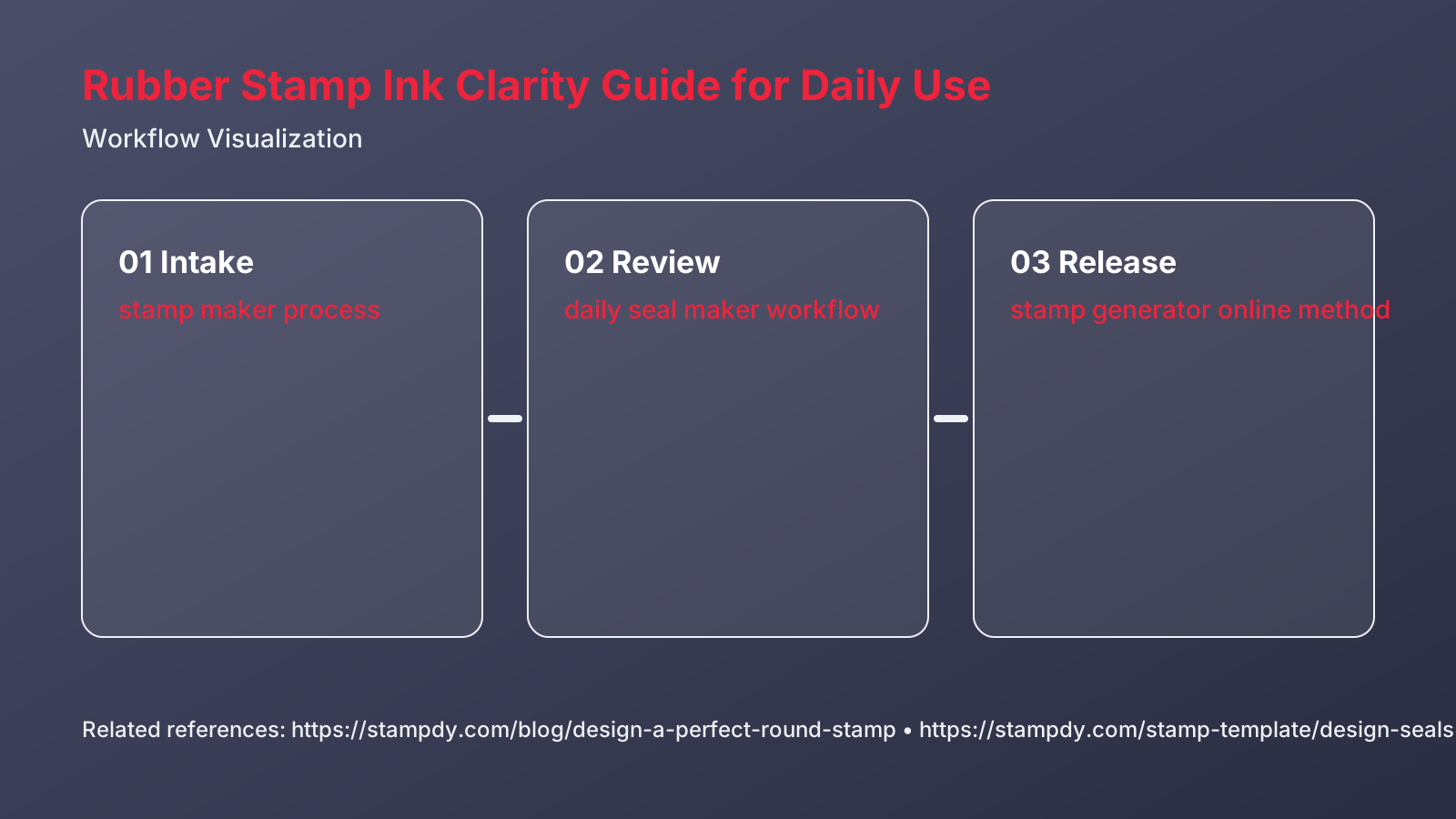
The team introduced three non-negotiable rules: one editable source owner, one legal wording owner, and two-pass review. They also defined a phrase bank so terms like daily seal maker workflow and stamp generator online method mapped to fixed intent categories. This reduced debate during review and made change history easier to audit.
Production Checks
Instead of approving from previews, they enforced true-size print checks on both office and production-like outputs. They documented border weight, spacing thresholds, and text fit limits in a short runbook. For comparison during edge cases, they referenced rubber stamp and tagged similar examples inside the release notes.
Link Strategy and Publishing
The content team stopped inserting links mechanically. They used how ai is transforming rubber stamp only where a reader would naturally ask for a related workflow and used a practical guide to modern stamp making where route context mattered. This made the article read more like a real operations memo and less like a keyword block.
Outcome After Four Weeks
Correction volume dropped, approval time shortened, and new staff could execute the process with fewer hand-holding sessions. The biggest improvement came from role clarity and repeatable checks, not from visual redesign.
Lessons Learned
- Intake language must be standardized before layout work starts.
- Release files should never be edited directly.
- Print checks need real paper, not preview confidence.
- Internal links should support decision points, not paragraph decoration.
Keyword Fit in the Case Context
In this case, professional stamp maker online workflow and daily online rubber stamp creator are not treated as isolated SEO phrases; they are written into the operational narrative where teams actually make choices. That placement keeps the article readable and avoids the synthetic feel of forced keyword blocks.
Case Conclusion
This case confirmed a simple principle: when teams operationalize rubber stamp ink clarity guide, they protect both speed and quality. The process becomes teachable, auditable, and resilient under deadline pressure.
Post-Case Operational Follow-Up
The team kept a weekly checkpoint where one person verified ownership, one person verified wording consistency, and one person verified print quality against the latest approved sample. That light-touch governance took less than an hour each week, but it prevented recurring drift and gave managers clear visibility into release readiness. They also linked every published artifact back to the source issue ticket, which made audit responses much faster when compliance questions surfaced later.
Case Reflection and Transfer Notes
After the initial fix, the most useful follow-up was not another redesign but a transfer checklist that could be reused across teams. The project lead documented exactly what changed, why it changed, and how reviewers should validate future releases. This prevented the same issue from returning in the next cycle. For case-based learning, this matters more than polished screenshots because real teams need explicit decision logic they can copy. A strong transfer note includes trigger conditions, risk signals, fallback steps, and owner assignments. It also records which terms were stabilized, including stamp maker process, daily seal maker workflow, and stamp generator online method, so new requests do not drift back into ambiguous language. When teams compare outcomes against design a perfect round stamp and design seals, they see why contextual linking and process discipline belong together. The result is a case study that does more than narrate a problem: it creates a reusable operating pattern for future work.
Field Case Analysis 1
In a fast-moving operations team, this stage of rubber stamp ink clarity guide for daily use is where teams either build momentum or create hidden debt. When the template maintainer and the quality reviewer do not share the same release assumptions, small differences become recurring defects. The most common trigger at this point is review comments mixed across legal and visual scope, because the team often trusts memory more than explicit operating notes. A reliable correction is to enforce a controlled phrase bank for high-volume request types and capture why the decision was made before the next handoff begins.
From a content and SEO angle, the workflow should integrate strategic phrases without breaking readability. Instead of dropping keywords into unrelated lines, tie daily seal maker workflow and stamp generator online method to concrete actions that readers can copy. For example, one paragraph can explain the intake decision path, and the next can explain the review threshold used to accept output. This keeps the text natural while still reinforcing search intent through contextual placement. When reference examples help, point readers to design seals and rubber stamp rather than adding decorative links with no practical value.
Operationally, treat this module as a measurable experiment. Track approval turnaround time for at least two release cycles and compare outcomes before and after the new control is adopted. If results do not improve, refine role ownership, tighten acceptance criteria, and document exceptions with explicit owners. For teams running cross-route updates, how ai is transforming rubber stamp can be used as an alignment checkpoint to confirm that language, layout, and publishing logic remain synchronized. This is how process discipline turns long-form content into a durable playbook rather than a one-time article.
Field Case Analysis 2
In a finance and procurement handoff flow, this stage of rubber stamp ink clarity guide for daily use is where teams either build momentum or create hidden debt. When the template maintainer and the quality reviewer do not share the same release assumptions, small differences become recurring defects. The most common trigger at this point is late print failure discovered after approval, because the team often trusts memory more than explicit operating notes. A reliable correction is to enforce a true-size print validation on two output conditions and capture why the decision was made before the next handoff begins.
From a content and SEO angle, the workflow should integrate strategic phrases without breaking readability. Instead of dropping keywords into unrelated lines, tie stamp generator online method and professional stamp maker online workflow to concrete actions that readers can copy. For example, one paragraph can explain the intake decision path, and the next can explain the review threshold used to accept output. This keeps the text natural while still reinforcing search intent through contextual placement. When reference examples help, point readers to rubber stamp and how ai is transforming rubber stamp rather than adding decorative links with no practical value.
Operationally, treat this module as a measurable experiment. Track time spent clarifying request language for at least two release cycles and compare outcomes before and after the new control is adopted. If results do not improve, refine role ownership, tighten acceptance criteria, and document exceptions with explicit owners. For teams running cross-route updates, a practical guide to modern stamp making can be used as an alignment checkpoint to confirm that language, layout, and publishing logic remain synchronized. This is how process discipline turns long-form content into a durable playbook rather than a one-time article.
Field Case Analysis 3
In a legal review pipeline with strict wording rules, this stage of rubber stamp ink clarity guide for daily use is where teams either build momentum or create hidden debt. When the team lead and the quality reviewer do not share the same release assumptions, small differences become recurring defects. The most common trigger at this point is missing evidence for why a change was approved, because the team often trusts memory more than explicit operating notes. A reliable correction is to enforce a monthly drift audit for repeated template families and capture why the decision was made before the next handoff begins.
From a content and SEO angle, the workflow should integrate strategic phrases without breaking readability. Instead of dropping keywords into unrelated lines, tie professional stamp maker online workflow and daily online rubber stamp creator to concrete actions that readers can copy. For example, one paragraph can explain the intake decision path, and the next can explain the review threshold used to accept output. This keeps the text natural while still reinforcing search intent through contextual placement. When reference examples help, point readers to how ai is transforming rubber stamp and a practical guide to modern stamp making rather than adding decorative links with no practical value.
Operationally, treat this module as a measurable experiment. Track time spent clarifying request language for at least two release cycles and compare outcomes before and after the new control is adopted. If results do not improve, refine role ownership, tighten acceptance criteria, and document exceptions with explicit owners. For teams running cross-route updates, design a perfect round stamp can be used as an alignment checkpoint to confirm that language, layout, and publishing logic remain synchronized. This is how process discipline turns long-form content into a durable playbook rather than a one-time article.
Field Case Analysis 4
In a finance and procurement handoff flow, this stage of rubber stamp ink clarity guide for daily use is where teams either build momentum or create hidden debt. When the production operator and the template maintainer do not share the same release assumptions, small differences become recurring defects. The most common trigger at this point is different branches using conflicting file versions, because the team often trusts memory more than explicit operating notes. A reliable correction is to enforce a weekly release note with owner and rationale fields and capture why the decision was made before the next handoff begins.
From a content and SEO angle, the workflow should integrate strategic phrases without breaking readability. Instead of dropping keywords into unrelated lines, tie daily online rubber stamp creator and stamp maker process to concrete actions that readers can copy. For example, one paragraph can explain the intake decision path, and the next can explain the review threshold used to accept output. This keeps the text natural while still reinforcing search intent through contextual placement. When reference examples help, point readers to a practical guide to modern stamp making and design a perfect round stamp rather than adding decorative links with no practical value.
Operationally, treat this module as a measurable experiment. Track time spent clarifying request language for at least two release cycles and compare outcomes before and after the new control is adopted. If results do not improve, refine role ownership, tighten acceptance criteria, and document exceptions with explicit owners. For teams running cross-route updates, design seals can be used as an alignment checkpoint to confirm that language, layout, and publishing logic remain synchronized. This is how process discipline turns long-form content into a durable playbook rather than a one-time article.
Field Case Analysis 5
In a compliance-heavy office, this stage of rubber stamp ink clarity guide for daily use is where teams either build momentum or create hidden debt. When the production operator and the template maintainer do not share the same release assumptions, small differences become recurring defects. The most common trigger at this point is missing evidence for why a change was approved, because the team often trusts memory more than explicit operating notes. A reliable correction is to enforce a route-aware internal linking checklist for long-form posts and capture why the decision was made before the next handoff begins.
From a content and SEO angle, the workflow should integrate strategic phrases without breaking readability. Instead of dropping keywords into unrelated lines, tie stamp maker process and daily seal maker workflow to concrete actions that readers can copy. For example, one paragraph can explain the intake decision path, and the next can explain the review threshold used to accept output. This keeps the text natural while still reinforcing search intent through contextual placement. When reference examples help, point readers to design a perfect round stamp and design seals rather than adding decorative links with no practical value.
Operationally, treat this module as a measurable experiment. Track number of post-release corrections for at least two release cycles and compare outcomes before and after the new control is adopted. If results do not improve, refine role ownership, tighten acceptance criteria, and document exceptions with explicit owners. For teams running cross-route updates, rubber stamp can be used as an alignment checkpoint to confirm that language, layout, and publishing logic remain synchronized. This is how process discipline turns long-form content into a durable playbook rather than a one-time article.
Field Case Analysis 6
In a legal review pipeline with strict wording rules, this stage of rubber stamp ink clarity guide for daily use is where teams either build momentum or create hidden debt. When the intake coordinator and the team lead do not share the same release assumptions, small differences become recurring defects. The most common trigger at this point is different branches using conflicting file versions, because the team often trusts memory more than explicit operating notes. A reliable correction is to enforce an archive policy that separates draft, approved, and published assets and capture why the decision was made before the next handoff begins.
From a content and SEO angle, the workflow should integrate strategic phrases without breaking readability. Instead of dropping keywords into unrelated lines, tie daily seal maker workflow and stamp generator online method to concrete actions that readers can copy. For example, one paragraph can explain the intake decision path, and the next can explain the review threshold used to accept output. This keeps the text natural while still reinforcing search intent through contextual placement. When reference examples help, point readers to design seals and rubber stamp rather than adding decorative links with no practical value.
Operationally, treat this module as a measurable experiment. Track first-pass acceptance rate for at least two release cycles and compare outcomes before and after the new control is adopted. If results do not improve, refine role ownership, tighten acceptance criteria, and document exceptions with explicit owners. For teams running cross-route updates, how ai is transforming rubber stamp can be used as an alignment checkpoint to confirm that language, layout, and publishing logic remain synchronized. This is how process discipline turns long-form content into a durable playbook rather than a one-time article.
Field Case Analysis 7
In a legal review pipeline with strict wording rules, this stage of rubber stamp ink clarity guide for daily use is where teams either build momentum or create hidden debt. When the compliance reviewer and the quality reviewer do not share the same release assumptions, small differences become recurring defects. The most common trigger at this point is late print failure discovered after approval, because the team often trusts memory more than explicit operating notes. A reliable correction is to enforce a monthly drift audit for repeated template families and capture why the decision was made before the next handoff begins.
From a content and SEO angle, the workflow should integrate strategic phrases without breaking readability. Instead of dropping keywords into unrelated lines, tie stamp generator online method and professional stamp maker online workflow to concrete actions that readers can copy. For example, one paragraph can explain the intake decision path, and the next can explain the review threshold used to accept output. This keeps the text natural while still reinforcing search intent through contextual placement. When reference examples help, point readers to rubber stamp and how ai is transforming rubber stamp rather than adding decorative links with no practical value.
Operationally, treat this module as a measurable experiment. Track approval turnaround time for at least two release cycles and compare outcomes before and after the new control is adopted. If results do not improve, refine role ownership, tighten acceptance criteria, and document exceptions with explicit owners. For teams running cross-route updates, a practical guide to modern stamp making can be used as an alignment checkpoint to confirm that language, layout, and publishing logic remain synchronized. This is how process discipline turns long-form content into a durable playbook rather than a one-time article.
Field Case Analysis 8
In a fast-moving operations team, this stage of rubber stamp ink clarity guide for daily use is where teams either build momentum or create hidden debt. When the quality reviewer and the intake coordinator do not share the same release assumptions, small differences become recurring defects. The most common trigger at this point is review comments mixed across legal and visual scope, because the team often trusts memory more than explicit operating notes. A reliable correction is to enforce a controlled phrase bank for high-volume request types and capture why the decision was made before the next handoff begins.
From a content and SEO angle, the workflow should integrate strategic phrases without breaking readability. Instead of dropping keywords into unrelated lines, tie professional stamp maker online workflow and daily online rubber stamp creator to concrete actions that readers can copy. For example, one paragraph can explain the intake decision path, and the next can explain the review threshold used to accept output. This keeps the text natural while still reinforcing search intent through contextual placement. When reference examples help, point readers to how ai is transforming rubber stamp and a practical guide to modern stamp making rather than adding decorative links with no practical value.
Operationally, treat this module as a measurable experiment. Track audit-response preparation time for at least two release cycles and compare outcomes before and after the new control is adopted. If results do not improve, refine role ownership, tighten acceptance criteria, and document exceptions with explicit owners. For teams running cross-route updates, design a perfect round stamp can be used as an alignment checkpoint to confirm that language, layout, and publishing logic remain synchronized. This is how process discipline turns long-form content into a durable playbook rather than a one-time article.
Field Case Analysis 9
In a distributed branch network, this stage of rubber stamp ink clarity guide for daily use is where teams either build momentum or create hidden debt. When the team lead and the production operator do not share the same release assumptions, small differences become recurring defects. The most common trigger at this point is different branches using conflicting file versions, because the team often trusts memory more than explicit operating notes. A reliable correction is to enforce a weekly release note with owner and rationale fields and capture why the decision was made before the next handoff begins.
From a content and SEO angle, the workflow should integrate strategic phrases without breaking readability. Instead of dropping keywords into unrelated lines, tie daily online rubber stamp creator and stamp maker process to concrete actions that readers can copy. For example, one paragraph can explain the intake decision path, and the next can explain the review threshold used to accept output. This keeps the text natural while still reinforcing search intent through contextual placement. When reference examples help, point readers to a practical guide to modern stamp making and design a perfect round stamp rather than adding decorative links with no practical value.
Operationally, treat this module as a measurable experiment. Track review-cycle length for at least two release cycles and compare outcomes before and after the new control is adopted. If results do not improve, refine role ownership, tighten acceptance criteria, and document exceptions with explicit owners. For teams running cross-route updates, design seals can be used as an alignment checkpoint to confirm that language, layout, and publishing logic remain synchronized. This is how process discipline turns long-form content into a durable playbook rather than a one-time article.
Field Case Analysis 10
In a fast-moving operations team, this stage of rubber stamp ink clarity guide for daily use is where teams either build momentum or create hidden debt. When the template maintainer and the document controller do not share the same release assumptions, small differences become recurring defects. The most common trigger at this point is semantic drift in repeated request wording, because the team often trusts memory more than explicit operating notes. A reliable correction is to enforce a monthly drift audit for repeated template families and capture why the decision was made before the next handoff begins.
From a content and SEO angle, the workflow should integrate strategic phrases without breaking readability. Instead of dropping keywords into unrelated lines, tie stamp maker process and daily seal maker workflow to concrete actions that readers can copy. For example, one paragraph can explain the intake decision path, and the next can explain the review threshold used to accept output. This keeps the text natural while still reinforcing search intent through contextual placement. When reference examples help, point readers to design a perfect round stamp and design seals rather than adding decorative links with no practical value.
Operationally, treat this module as a measurable experiment. Track rate of duplicate template creation for at least two release cycles and compare outcomes before and after the new control is adopted. If results do not improve, refine role ownership, tighten acceptance criteria, and document exceptions with explicit owners. For teams running cross-route updates, rubber stamp can be used as an alignment checkpoint to confirm that language, layout, and publishing logic remain synchronized. This is how process discipline turns long-form content into a durable playbook rather than a one-time article.