Procurement Scorecards for Multi-Branch Stamp Vendor Selection
A multi-branch stamp purchase should not be decided by unit price alone. A stamp maker online free workflow lets procurement teams prepare the same test artwork for every bidder, but the scorecard still needs to examine proof quality, replacement handling, local delivery, file controls, and ownership of approvals. The objective is a comparison that branch managers can repeat without quietly changing the requirements.
This guide explains how to define the buying case, build weighted criteria, run a controlled sample, and record the decision. It treats a digital layout as test material rather than proof that any particular vendor can manufacture the design correctly.
Define the Branch Requirements Before Scoring Vendors
Begin with an inventory rather than a supplier list. Record which branches need address stamps, receiving marks, date stamps, department labels, or brand marks. For each type, note the intended surface, approximate impression size, expected frequency, required ink color, and whether the wording is controlled by an internal policy.
Separate common requirements from local exceptions. A shared business-name stamp may use one approved design across the network, while a return-address stamp necessarily changes by branch. Language, tax identifiers, department names, and delivery conditions may also vary. If exceptions are not listed before bidding, vendors will price different scopes and the resulting totals will not be comparable.
Teams still deciding how to translate needs into an editable layout can review the online rubber stamp creator workflow. Use it to prepare a consistent reference file, then ask every vendor to confirm its own production tolerances.
Build a Scorecard Around Verifiable Evidence
A useful scorecard asks for evidence that procurement can inspect. Avoid criteria such as “best quality” or “excellent service” unless the rating scale defines what those phrases mean. A practical structure can include:
| Criterion | Evidence to request | Example scoring question |
|---|---|---|
| Proof accuracy | Digital or physical proof | Does the proof match approved wording and dimensions? |
| Reproduction quality | Sample impressions | Are small text, borders, and open spaces legible? |
| Branch fulfillment | Delivery plan | Can each location receive the correct labeled unit? |
| Change control | Revision procedure | How are corrected files separated from obsolete files? |
| Replacement support | Written process | Who approves and tracks a damaged or incorrect unit? |
| Cost | Itemized quote | Are setup, proof, shipping, tax, and replacement costs visible? |
Weight the categories according to the purchase risk. A branch network with frequent address changes may value revision control more than a team ordering one stable mark. Document the weights before opening commercial bids so the scoring method does not shift toward a favored supplier.
The online stamp design maker guide can help the buyer create a neutral reference layout. It should not be used to infer vendor performance; only the submitted proof and service documentation belong in the score.

Use a Stamp Maker Online Free Workflow for the Test File
Choose a representative design that contains the features most likely to expose production differences: the smallest approved text, a border, a logo or icon if required, and realistic spacing. Do not create an artificially difficult test that no branch will use. The sample should reflect the actual order.
Give every shortlisted vendor the same source file, target dimensions, ink requirement, paper examples, deadline, and proof instructions. Record any clarification sent after the initial request and distribute the same clarification to all bidders. A supplier that asks a useful technical question should not be penalized; the score should reflect whether the final response is complete and controlled.
Keep the editable working file, the exported reference, and the vendor-ready package as separate records. The buyer should be able to show exactly what each supplier received without relying on an email attachment that may have been renamed or recompressed. A simple package note can list the canvas dimensions, export format, color expectation, filename, and checksum or internal document version. If a bidder requests another format, log the request and make the same equivalent file available to every supplier still under consideration.
For early layout exploration, a rubber stamp creator free guide can provide a common starting point. Procurement should still retain the approved master and identify it with a version number before sending it outside the organization.
Inspect the Proof at the Intended Impression Size
Reviewing a large image on screen is not enough. Print the proof at 100% scale or obtain a physical sample, depending on the order value and risk. Check the longest branch name, postal codes, punctuation, counters inside letters, distance from the border, and alignment of curved text. Test on a surface comparable to the branch's real use when possible.
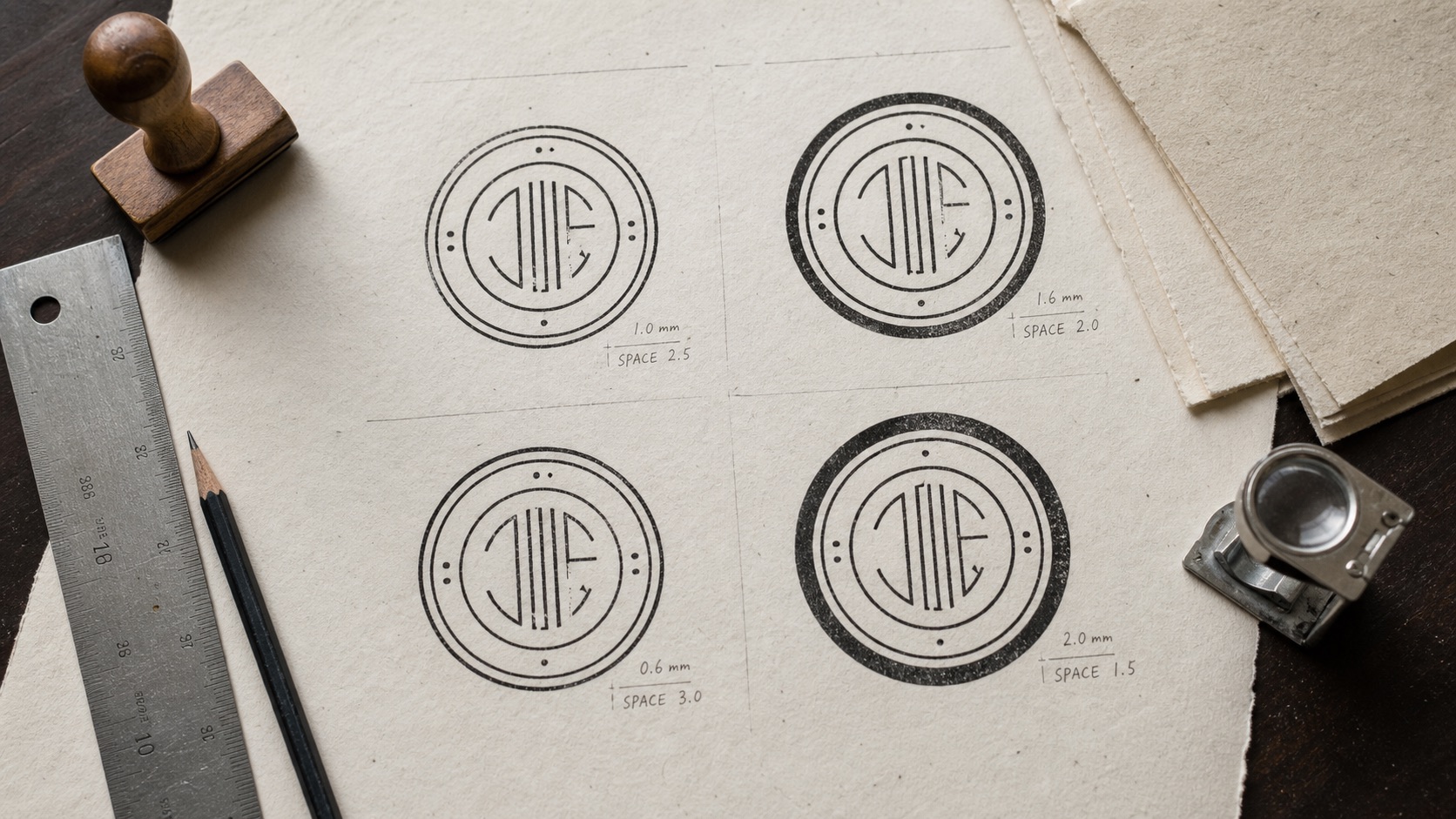
Use a written defect list. “Looks slightly wrong” is difficult to score consistently; “postal code differs from approved file” or “the inner space of the 8 closes at final size” is specific. Give vendors an opportunity to respond under the same correction rule, then score both the corrected proof and the clarity of the revision process.
Compare Total Cost Instead of the Headline Unit Price
Normalize quotes into the same cost model. Include design or setup charges, proof fees, shipping to multiple locations, taxes, optional ink pads, rush service, and the expected treatment of incorrect or damaged units. Do not insert an assumed failure rate unless the organization has evidence for it. Instead, compare the written replacement terms directly.
The lowest unit price may still be the best decision, but the scorecard should make that conclusion traceable. Conversely, a higher price should not win because of an undefined quality impression. Record which evidence justified each score and who approved any exception to the weighting.
For a broader operational view, the administrative stamp workflow guide helps identify handoffs that a vendor quote may overlook, such as who confirms wording and who receives branch shipments.
Pilot Fulfillment With a Small Set of Branches
Before a network-wide release, choose a pilot that represents meaningful variation: one large branch, one remote location, and one branch with a local wording or language requirement. The purpose is not to produce a marketing success story. It is to test order labeling, proof approval, delivery, local inspection, and correction handling under the proposed process.
Give each pilot branch the same acceptance checklist. Ask staff to compare the delivered unit with the approved proof, make several test impressions, and photograph or record defects using consistent terms. Procurement should distinguish supplier defects from internal specification errors. If the source address was wrong, changing vendors will not solve the underlying control problem.
Teams that want to compare a manual design path with a browser-based option can consult the stamp maker online overview. Keep that tool decision separate from the vendor score unless the supplier is also responsible for file preparation.
Record the Award and Preserve the Next Review Point
The final award record should include the requirement version, scorecard, evidence files, commercial comparison, approver names, selected exceptions, and the date when performance will be reviewed. Store the approved artwork separately from vendor proofs. Clearly label rejected and superseded files so a branch cannot reorder from the wrong version.
Define a short performance review using observable events: incorrect wording, missed branch labels, proof response time, delivery variance, and replacement resolution. Do not invent targets after the contract begins. Agree on definitions and reporting responsibility during selection.
Also decide who owns the artwork after award. Procurement may hold the commercial record while a brand, facilities, or operations team maintains the approved master. Branch staff need a clear request route rather than direct access to an uncontrolled folder. When a location closes, moves, or changes its legal name, the owner should retire the obsolete design, document the replacement, and notify the vendor before another order is accepted.
If branches are permitted to prepare future variations themselves, provide a controlled stamp maker online free reference together with approval rules. Free access to a design interface does not remove the need for brand, wording, privacy, and production review.
Frequently Asked Questions
Should procurement score a digital proof or a physical sample?
Use a digital proof for wording and layout checks. Request a physical sample when material, ink, small details, or order value make reproduction quality important. State the requirement consistently for every shortlisted vendor.
How many branches should join a pilot?
There is no universal number. Select enough locations to cover the main variations in volume, geography, language, and stamp type without turning the pilot into the full rollout.
Can sustainability be included in the scorecard?
Yes, when the organization defines the evidence it will accept, such as material declarations, refill options, packaging information, or delivery consolidation. Avoid awarding points for vague environmental language.
What should happen when a branch needs an exception?
Record the reason, approving owner, affected wording or specification, and whether the exception is temporary. Keep the common standard intact for all unaffected branches.
Conclusion
A stamp maker online free workflow can standardize the test artwork, but a defensible vendor decision depends on clearer work: define branch variations, request comparable evidence, inspect final-size proofs, normalize cost, pilot fulfillment, and preserve the award record. Use the scorecard to expose differences that matter operationally, not to turn subjective preference into a numerical result.