Smart Contract Management After Signing: Renewals and Obligations
Smart contract management begins when the signed PDF becomes active work. The signature closes the approval stage, but the agreement may create delivery dates, payment terms, reporting duties, access commitments, notice periods, renewals, and termination decisions. If those obligations remain buried in the document, a completed signing request can still lead to missed action.
This guide focuses on ordinary business contracts stored as documents, not self-executing blockchain code. “Smart” means using a deliberate, searchable workflow: preserve the executed record, extract the terms that require action, assign owners, schedule review points, and keep later decisions connected to the agreement that created them.
Define the Smart Contract Management Finish Line Before Sending
Contract management is easier when the post-signing handoff is designed before signature. Decide who will receive the completed file, where it will be stored, which supporting records must be retained, and who will translate the agreement into operational tasks.
The sender is not always the contract owner. A sales coordinator might send the PDF, while a commercial manager owns the relationship and finance owns invoicing. Name the post-signing owner explicitly. That person does not need to perform every obligation, but they should confirm that the record and assignments are complete.
Use a stable contract title and identifier from the start. The filename should help a reviewer distinguish the agreement from drafts, quotes, and attachments without exposing unnecessary sensitive data. If several documents form the agreement, list the main document, schedules, exhibits, and incorporated policies so the final package is not reduced to one signature page.
Prepare the signing workflow through the Stampdy business PDF workspace or another approved process only after the terms and attachments are final. A controlled input makes later obligation tracking more reliable because everyone is working from the same version.
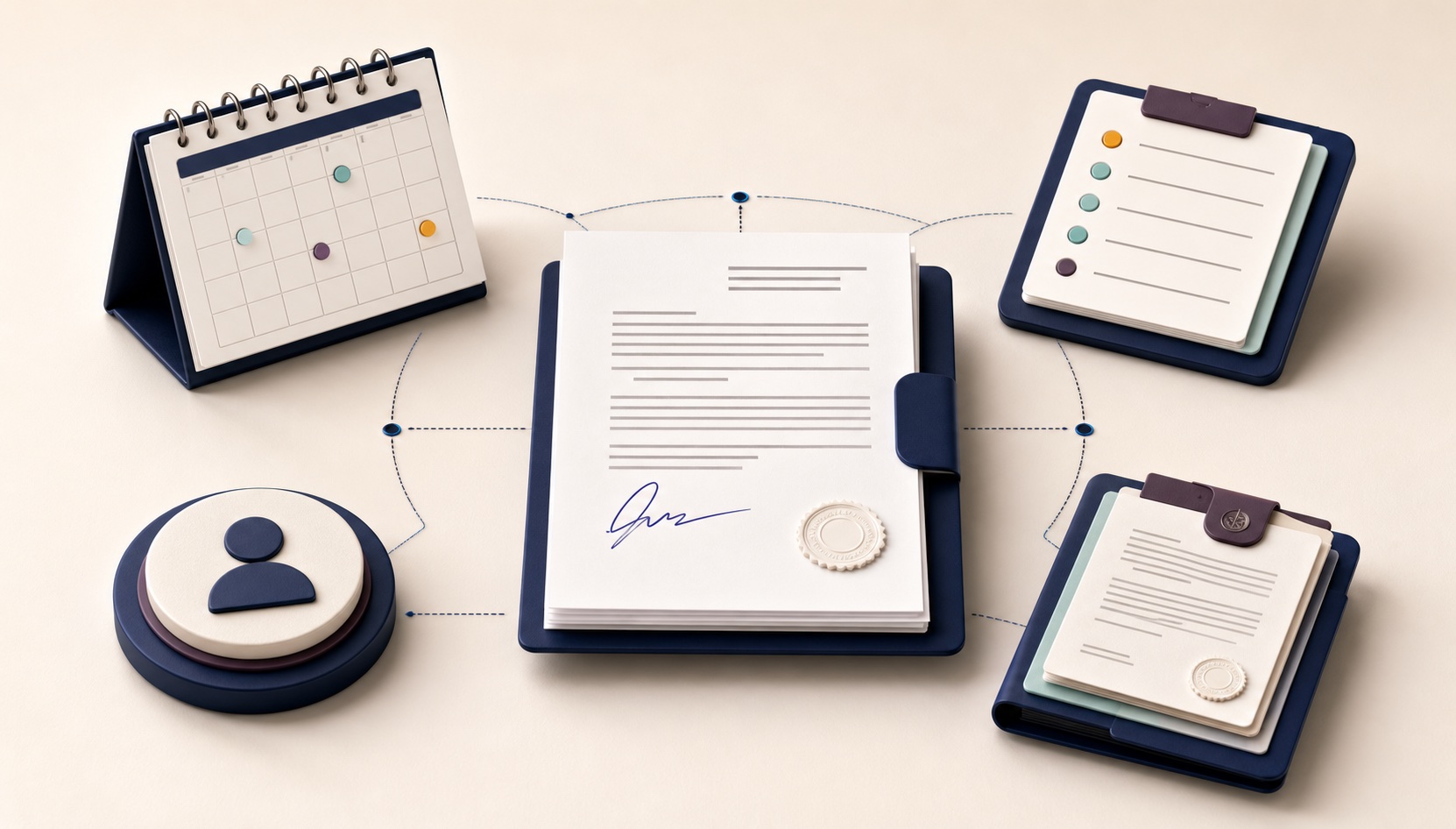
Before sending, identify terms that will need tracking. You do not need to build the complete register at this stage, but flag effective date, term, renewal, notice, payment, service, reporting, insurance, data handling, and termination sections for review after completion.
Capture the Executed Record Without Mixing Drafts
When the request is complete, preserve the executed PDF as a distinct record. Do not overwrite the unsigned approved copy or keep the final file under a generic download name. Use a controlled filename and store it in the location defined by the organization.
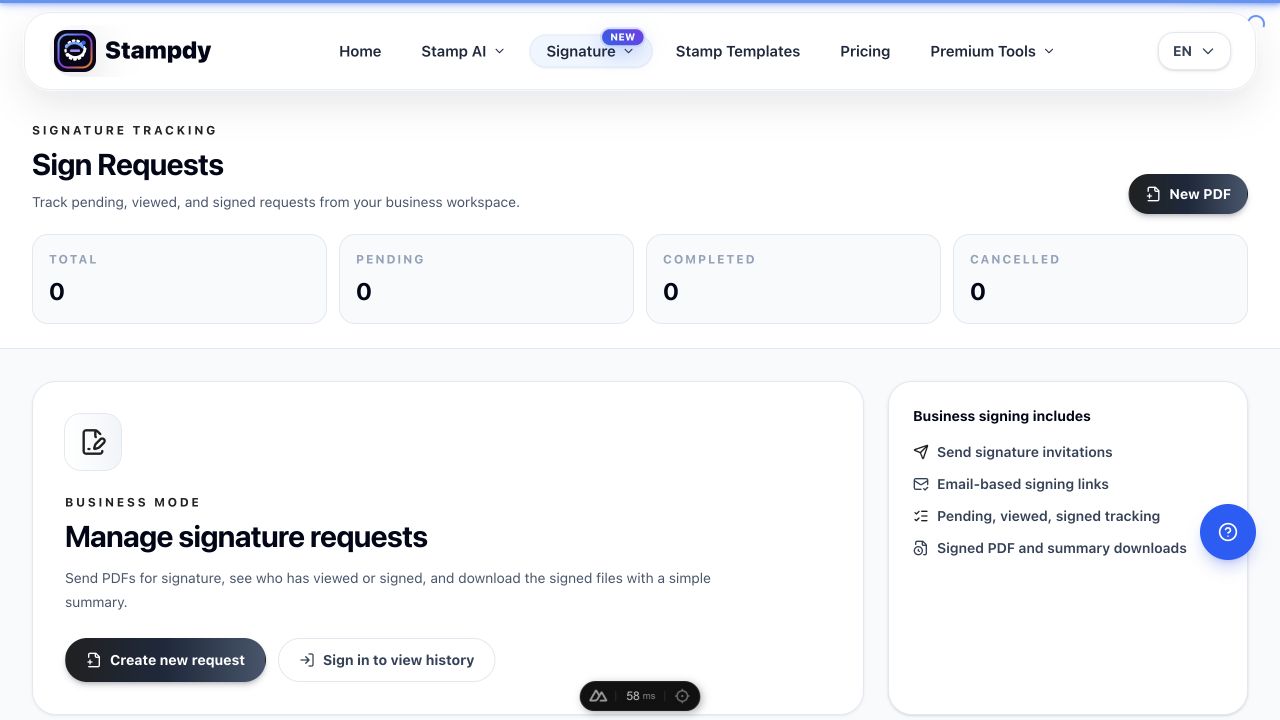
Retain the supporting workflow records required by policy. In the current Stampdy request view, the available records can include event history, a signed PDF, a signing summary, a completion certificate, and a PDF hash. These artifacts describe different parts of the process. They should not be presented as automatic proof of legal effect, identity, or compliance.
Confirm that the final package is complete:
- All required parties signed the intended version.
- Signature and date fields appear on the correct pages.
- Schedules and exhibits referenced by the contract are present.
- The executed PDF opens normally in a standard viewer.
- The signing summary or certificate belongs to the same request.
- Cancelled, expired, and superseded requests remain distinguishable from the completed record.
Use the signature request tracker to inspect status and supporting records, then move the finalized package into the contract repository. The request list is useful operational history, but it should not become the only place where the business expects to find active obligations.
Build a Contract Fact Sheet Before Assigning Tasks
A contract fact sheet turns the executed document into structured context. Keep it short enough to maintain and precise enough to support decisions. At minimum, record:
- Contract title and internal identifier.
- Parties and internal relationship owner.
- Effective date and initial term.
- Expiration or renewal mechanism.
- Notice method, address, and deadline.
- Payment structure and invoicing contacts.
- Major delivery or service commitments.
- Required reports, reviews, certificates, or evidence.
- Confidentiality, data, insurance, or access obligations that need an owner.
- Link to the executed package and approval record.
Do not copy every clause into a spreadsheet. The fact sheet is an index to action, not a replacement for the contract. Include the section or page reference for material terms so a reviewer can return to the original wording.
Separate facts from interpretation. “Notice must be delivered 60 days before the end of the term” is a contract fact when that is the actual wording. “We should renegotiate pricing 120 days before renewal” is an internal planning decision. Labeling the difference prevents a project-management preference from being mistaken for a legal deadline.
Have an appropriate reviewer confirm ambiguous terms. If the renewal clause contains exceptions, conditional dates, or multiple notice methods, do not simplify it into a single calendar event without review.
Turn Contract Language Into Owned Obligations
An obligation entry should describe an action, owner, due rule, evidence, and escalation path. Avoid vague tasks such as “manage vendor” or “review contract.” A useful entry might say: “Finance owner verifies monthly usage invoice against Schedule B; due within five business days of receipt; retain approved invoice record.”
Assign the role that controls the action, not merely the person who signed. The signer's authority and the operational owner's responsibility may be different. Use role-based ownership where staff changes are common, then name the current assignee in the task system.
Classify obligations so the team can review them efficiently:
- One-time setup: onboarding, access provision, initial payment, certificate delivery.
- Recurring: monthly invoices, quarterly reports, annual insurance evidence, periodic reviews.
- Event-driven: incident notice, change request, audit support, service failure response.
- End-of-term: renewal review, notice, return of data or property, final payment, access removal.
Attach evidence requirements to each obligation. “Provide report” is incomplete if the contract owner cannot tell whether delivery occurred. Identify the report, recipient, accepted channel, and storage location. Evidence does not need to be excessive; it needs to be proportional and retrievable.
Avoid measuring obligations with invented performance data. Use the service levels, dates, and acceptance rules stated in the agreement. If an operational metric is added by the team, label it as an internal management measure.
Manage Renewal and Notice as Separate Dates
Renewal risk often comes from treating the expiration date as the only date. The decision point usually occurs earlier because the contract may require advance notice, internal review, budgeting, procurement, or negotiation.
Create separate calendar fields for:
- Current term end date.
- Contractual notice deadline.
- Internal review start date.
- Decision owner and approval date.
- Planned delivery date for any notice.
- Confirmation that notice was received, when required.
Base the contractual deadline on the executed wording and the applicable interpretation approved by legal or contract management. Base the internal review date on the time the organization needs to make a decision. Do not move the contractual deadline simply because a reminder falls on a weekend or a team member is away; escalate the scheduling question in advance.
Renewal review should consider more than price. Check performance, open disputes, data or access dependencies, unused services, new business requirements, notice mechanics, and transition effort. Record the decision and its reasoning without rewriting the underlying contract facts.
When a contract will not renew, create a closeout plan. A termination or expiry can require final invoices, data return or deletion, asset return, credential removal, customer communication, and record retention. Assign those actions before delivering notice so the organization can meet both the deadline and the operational consequences.
Keep Changes Connected to the Original Agreement
Contracts change through amendments, statements of work, change orders, renewals, and approved notices. Store each change as a linked record rather than silently replacing the original PDF.
Maintain a simple document chain:
- Original executed agreement.
- Each executed amendment or schedule.
- Current fact sheet showing which terms changed.
- Decision and approval record for the change.
- Updated obligation entries and dates.
When an amendment changes one clause, preserve the original agreement and identify the modified section. Do not create a “latest contract.pdf” file that hides how the terms evolved. A reviewer should be able to reconstruct the current position from the document chain.
Use a new tracked signature request for a revised agreement when signatures are required. The Stampdy electronic signature workflow can prepare and send the new PDF, but the contract repository should connect that request to the earlier agreement and explain what changed.
Update tasks only after the change is approved and executed under the required process. Draft amendments should not alter live obligations unless the organization has separately authorized an interim action.
Run a Small, Useful Contract Review Cadence
The right review cadence depends on the portfolio and risk. Use events and decision dates instead of scheduling meetings for every contract on the same interval.
A practical review queue can include:
- Contracts approaching the internal renewal-review date.
- Overdue or disputed obligations.
- Agreements with missing owners.
- Changes awaiting signature or repository update.
- Contracts affected by a product, supplier, policy, or organizational change.
- Completed agreements that still lack a fact sheet or task handoff.
Review exceptions first. A contract with stable recurring tasks does not need the same attention as one with a missed report or an approaching notice deadline. Keep the meeting output concrete: decision, owner, due date, and link to the governing term.
Access to contract records should follow the organization's policy. Not every operational owner needs every document, and not every signing-system event needs to be copied into the contract register. Store enough information to act while limiting unnecessary duplication of sensitive data.
Frequently Asked Questions
Is smart contract management the same as a blockchain smart contract?
Not in this guide. Here, smart contract management means a disciplined system for managing signed business documents, obligations, renewals, and records. A blockchain smart contract is executable code on a blockchain and requires a different technical and legal analysis.
When should renewal review begin?
Work backward from the contractual notice deadline, then allow time for operational review, budgeting, negotiation, approval, and delivery of notice. The correct dates depend on the executed clause and organizational process; do not use a universal lead time.
Should the signing platform be the contract repository?
It can provide useful request and completion records, but the organization should decide where executed agreements, amendments, obligations, and retention controls live. Avoid relying on a request list as the only source for contract operations.
Who should own obligations after signing?
Assign each obligation to the role that can perform or coordinate it. A contract owner should oversee the handoff and exceptions, while finance, operations, security, HR, sales, or another function may own specific actions.
Conclusion
Smart contract management turns an executed PDF into a controlled set of decisions and actions. Preserve the final package, create a concise fact sheet, separate contract facts from internal plans, assign every material obligation, and schedule renewal review before the notice deadline. Keep amendments linked to the original agreement and make the next action visible. That is how signing becomes the start of reliable contract performance rather than the end of document administration.